
News
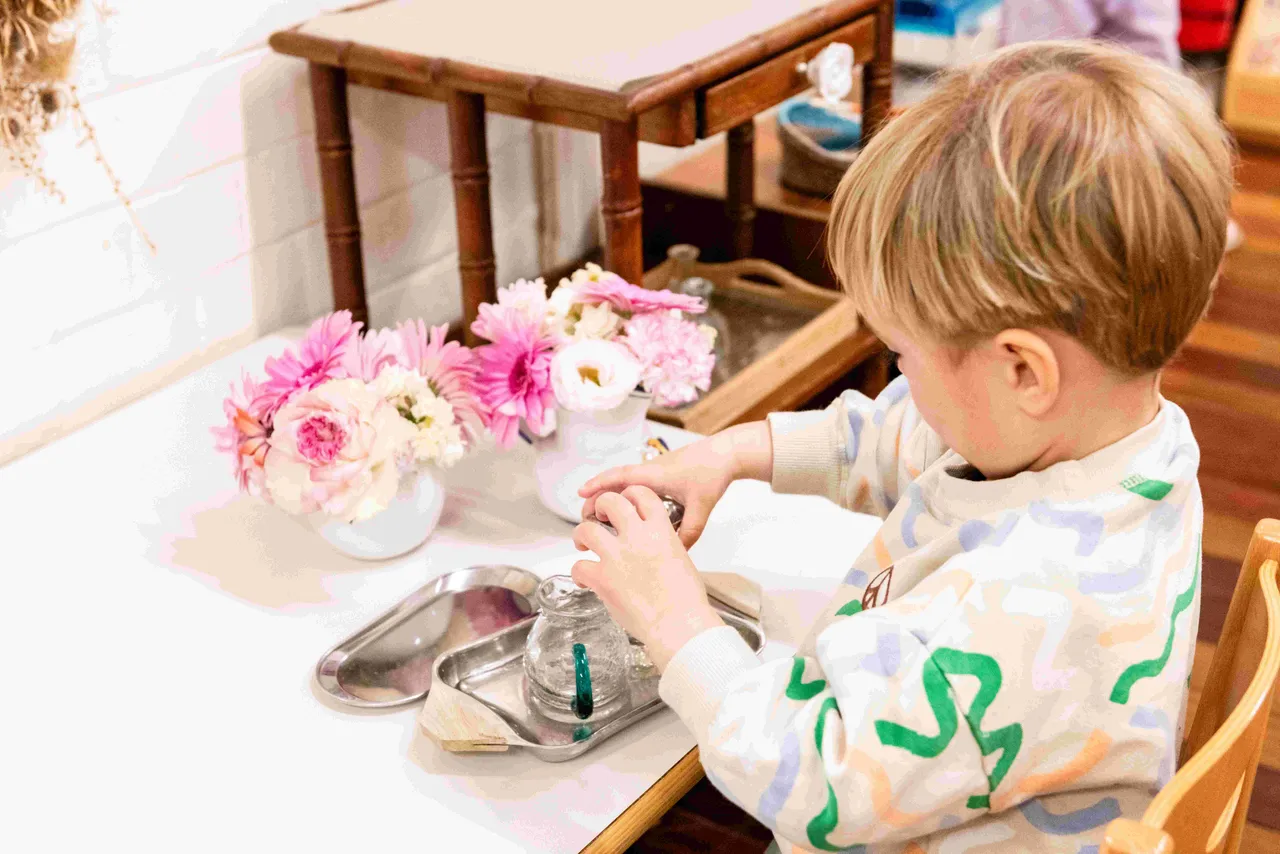
How movement supports coordination, concentration and learning in the early years.
Watch a young child carefully pouring water into a glass, carrying a tray across a room or balancing along a low wall. What might appear to be a simple physical activity involves a remarkable amount of learning.
For young children, movement is closely connected to how they develop concentration, coordination and cognitive skills. Children don't just need opportunities to move to develop physical strength. They also use movement to understand the world around them.
The connection between movement and learning
When a child learns to pour water from a jug, they must coordinate their hands, judge distance, control their movements and adjust when something doesn't go as planned.
This seemingly simple task engages several areas of development at once.
Physical coordination improves through practice, while cognitive skills such as attention, planning, problem-solving and spatial awareness are also exercised.
As movements become more controlled, children can devote greater attention to the task itself. What initially requires considerable effort gradually becomes more familiar, allowing concentration to deepen.
Why Montessori encourages purposeful movement
Maria Montessori recognised the close relationship between movement and intellectual development. She observed that young children learn through doing, particularly when they can use their hands to explore and interact with their environment.
In a Montessori classroom, movement is a natural and necessary part of learning.
Children move freely within a carefully prepared environment, selecting activities from accessible shelves, carrying materials to their workspace and returning them when finished.
Many activities involve everyday tasks, known in Montessori education as Practical Life. These might include washing a table, preparing fruit, arranging flowers or transferring objects between containers.
Each activity has a clear purpose and offers opportunities to practise coordination, develop independence and experience the satisfaction of completing something for themselves.
How movement supports concentration
Concentration is not something young children develop simply by being asked to sit quietly.
It grows through repeated opportunities to engage in activities that capture their interest and provide an appropriate level of challenge.
A child carefully transferring water between two vessels may repeat the same action many times. Through this repetition, they refine their movements, notice small details and gradually sustain their attention for longer periods.
Montessori environments support this process by allowing children time to work without unnecessary interruption.
Learning through movement at ISMS
Located in Balmain, Inner Sydney Montessori School (ISMS) provides authentic Montessori education where purposeful movement is part of everyday learning.
Our Montessori environments are thoughtfully prepared so children can choose meaningful activities, practise practical skills and develop independence through hands-on experience.
Rather than separating physical activity from intellectual learning, the Montessori approach recognises how closely the two are connected.
Curious to see what this looks like in practice?
We welcome families to visit our Balmain campus, explore our learning environments and learn more about our approach to early childhood education.

ISMS is an independent school based in Sydney that delivers authentic Montessori education to children from birth to 12 years of age with a commitment to the Montessori philosophy.